
What to Do When You "Have Nothing to Wear"

Nora Whitmore
10 min read

A full closet and nothing to wear is not a storage problem. It is a decision problem.
Most mornings do not go wrong because you own too little. They go wrong because every piece asks you to make a fresh decision, and by the time you have tried three combinations you have lost the patience to make a fourth. The clothes are fine. The system is missing.
A system, in this case, is nothing more than a handful of outfit formulas you already trust. Formulas remove the guesswork: you know the shapes work together, so all you decide in the morning is which version of the formula you feel like wearing.
Below are seven formulas that hold up across seasons, budgets and body shapes. Learn two or three of them well and the "nothing to wear" mornings mostly disappear.
1. Structured Blazer + Simple Top + Straight or Wide-Leg Jeans
This is the most forgiving formula on the list, which is why stylists reach for it first.
The blazer supplies structure at the shoulder, the jeans supply a clean vertical line, and the top in between only has to be quiet. A white tee, a fine-knit crew neck or a slim tank all work.
Keep the jeans straight or gently wide. A very tapered leg fights the shoulder line of the blazer and makes the whole outfit look top-heavy.
For colour, let the blazer and the jeans sit in the same temperature family — a warm camel with warm indigo, a cool charcoal with cool grey-blue — and choose the top in a neutral that matches your skin's undertone.
Loafers make it polished. White trainers make it weekend. The formula does not change; only the shoes do.
2. Matching Set or Coordinated Two-Piece
A matching set answers the hardest question in getting dressed — do these go together? — before you open the wardrobe.
Knit sets, tailored co-ords and even a shirt worn with trousers cut from the same fabric all count. The shared colour and texture read as intentional even when the pieces are very simple.
Because the set does the coordinating, you can afford one contrasting element: a bag in a different colour, a metallic shoe, a scarf with print.
If a full set feels like a lot of one colour, break it with a neutral layer on top: a trench over a knit set, a denim jacket over a linen one.
Your wardrobe can
feel easier.
Discover your personal colors, outfit ideas, and guidance designed around your life and your style.

3. Monochrome From Head to Toe
Dressing in a single colour family is the quickest way to look like you planned an outfit, even when you did not.
Black is the obvious version, but the formula works just as well in navy, cream, chocolate or olive. The trick is varying the tones and textures within that colour so the outfit has depth: a ribbed knit, a smooth trouser, a suede shoe.
One colour top to bottom creates an unbroken vertical line, which visually lengthens the body — useful if you like to look taller, and flattering on most proportions.
Start with a colour you already own several pieces in. Two items in the same family are enough for the first attempt; the shoes can be the third.
4. Elevated Basics: Knit + Tailored Trousers
A good knit and a good pair of trousers are the two most useful pieces most people own, and they look better together than either does alone.
The contrast is what makes it work: soft against structured, casual against considered. A fine merino with a pleated trouser reads as effortless; a chunky cable knit with a slim wool trouser reads as cosy but still deliberate.
Tuck the front of the knit into the waistband, or choose a knit that ends at the hip, so the trouser's waist stays visible. That single line at the waist is what keeps the look from turning into loungewear.
Finish with a shoe that has some polish — a loafer, an ankle boot, a clean court shoe — and the formula is ready for the office as well as the weekend.
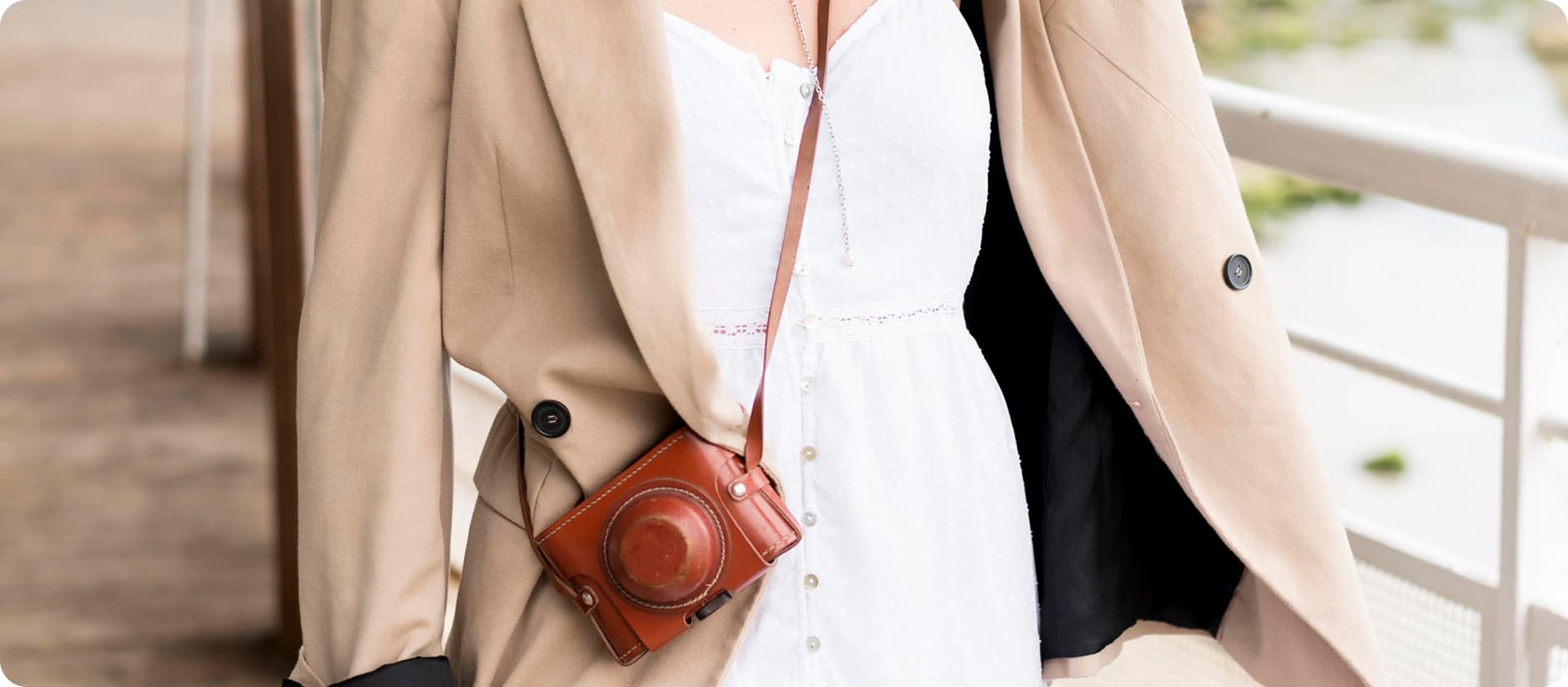
5. Dress + One Layer
A dress is already an outfit. The reason it sometimes feels unfinished is that it is missing a second shape.
Add exactly one layer and stop there:
- a cropped jacket to shorten the torso and define the waist
- a long cardigan or duster to create a vertical line
- a shirt worn open as a light overshirt
- a fitted knit over a slip dress so the dress reads as a skirt
The layer should contrast with the dress in weight or texture. A silky dress wants a structured or knitted layer; a knit dress wants something crisp on top.
Shoes decide the mood. The same dress and layer become daytime with a flat and evening with a heel — no new pieces required.
6. Button-Down Shirt + Denim or Trousers
The shirt formula is the one most likely to be already hanging in your wardrobe, and the one most often worn badly.
Fit is everything here. The shoulder seam should sit on your shoulder, the sleeve should end at the wrist bone, and the body should skim rather than cling or billow. A shirt that fits well needs almost nothing else.
Wear it fully tucked with a belt for the cleanest version, half-tucked for something more relaxed, or open over a tank when you want a layered look without a jacket.
A white or pale blue shirt works with every colour of trouser you own. A striped or coloured shirt works best with a neutral bottom so the two do not compete.
7. Simple Base + Statement Piece
The final formula is the one that lets you wear the pieces you love without wondering what goes with them.
The base is deliberately plain: a neutral top and bottom in the same family, well fitted and free of detail.
On top of that base goes one piece that carries the whole look — a printed coat, a bold-coloured knit, an unusual skirt, a sculptural bag. Because the base is quiet, the statement piece does not need help from anything else.
The rule is one statement per outfit. Two compete for attention; three start to look like a costume.
Final Thoughts
None of these formulas require new clothes. Almost every wardrobe already contains the pieces for at least four of them; what has been missing is the habit of reaching for the formula rather than the individual item.
Pick the two formulas that match how you actually live, hang those combinations together, and give yourself a week of wearing them. The morning decision shrinks from thirty options to two — and that is usually all it takes to feel dressed rather than merely covered.